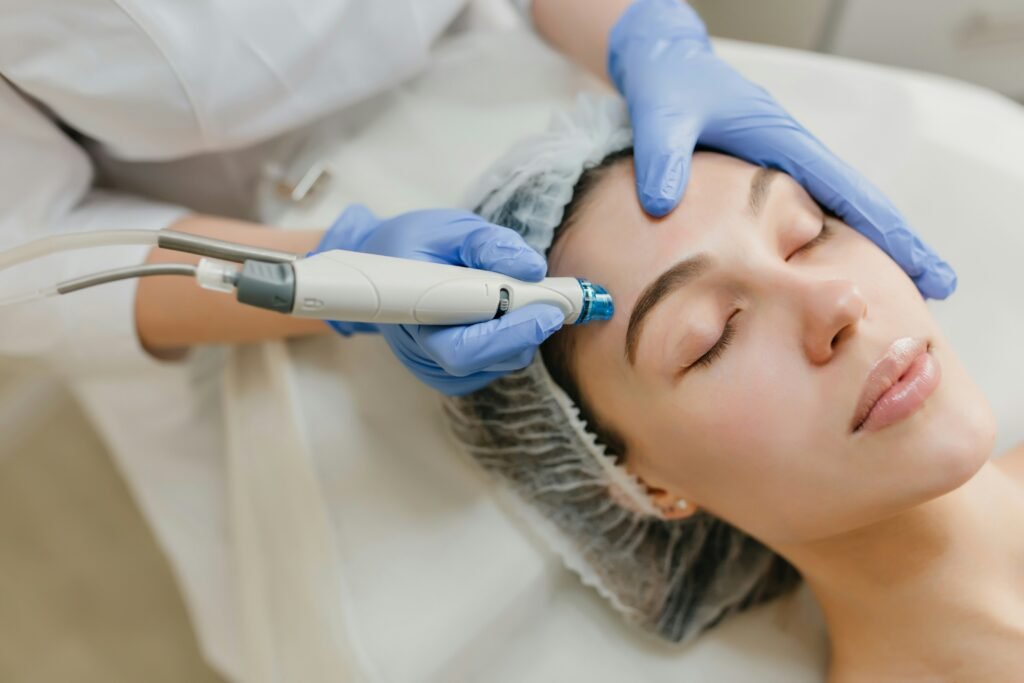
Microneedling has taken the skincare world by storm, heralded for its ability to rejuvenate skin with minimal invasiveness. But behind the buzz lies a fascinating interplay of biology and technology that drives lasting improvements in texture, firmness and tone. In this post, we’ll dive into the science of microneedling—how it works, why it’s so effective and what you can expect from the treatment.
What Is Microneedling?
At its core, microneedling harnesses your body’s natural healing response. Using a handheld device studded with ultrafine needles, it creates controlled micro‑injuries in the epidermis. These tiny channels are imperceptible on the surface but powerful enough to kick‑start a cascade of growth factors and repair mechanisms deep within the dermis.
The Biology of Skin Renewal
When skin is punctured—even at microscopic depths—it perceives those channels as “injuries.” In response, platelets rush to the site and release signalling molecules that summon fibroblasts—the cells responsible for producing collagen and elastin. Over the following days and weeks, these fibroblasts lay down fresh collagen fibers in a more organised network, plumping fine lines, firming tissue and smoothing uneven texture.
At the same time, microneedling enhances the skin’s permeability. The micro‑channels allow topical serums and growth factors to penetrate far more deeply than they could on intact skin, multiplying the benefits of any active ingredients you apply immediately afterward.
Key Benefits Explained
Natural Collagen Stimulation
Unlike lasers or chemical peels, microneedling works beneath the surface without removing the outermost layer of skin. By spurring your own collagen production, it yields gradual, natural‑looking firmness rather than instant but potentially superficial tightening.
Scar and Texture Improvement
Acne scars, surgical scars and stretch marks often result from disorganised collagen deposition. Controlled needling breaks down the old, tangled tissue and encourages new, evenly aligned fibers, gradually reducing the appearance of scars and rough patches.
Pore Refinement
Enlarged pores are rarely a structural defect and more often a consequence of weakened dermal support. As collagen regenerates around each follicle, pores appear narrower and skin takes on a smoother, more polished finish.
Enhanced Product Absorption
The microscopic channels created during treatment close within hours, but while they’re open they act like express lanes for any serums, peptides or growth factors you apply. This maximises the potency of post‑treatment applications, delivering hydration and actives deep into the dermal layer.
Who Is a Good Candidate?
Microneedling is remarkably versatile and safe for most skin types, including those with delicate or pigmented skin that can react poorly to laser treatments. It’s ideal for anyone seeking to reduce fine lines, acne scars, stretch marks, enlarged pores or overall textural irregularities. However, it’s not recommended for active acne, eczema flares or certain bleeding disorders, so a professional consultation is essential.
Microneedling bridges the gap between non‑invasive facials and more aggressive resurfacing procedures, offering a scientifically grounded path to healthier, more youthful skin. By tapping into your body’s innate repair systems and amplifying the delivery of rejuvenating serums, it provides a sustainable approach to long‑term skin vitality. If you’ve been curious about how to achieve firmer texture, diminish scars and refine pores—all without harsh side effects—microneedling may be the solution you’ve been seeking.